
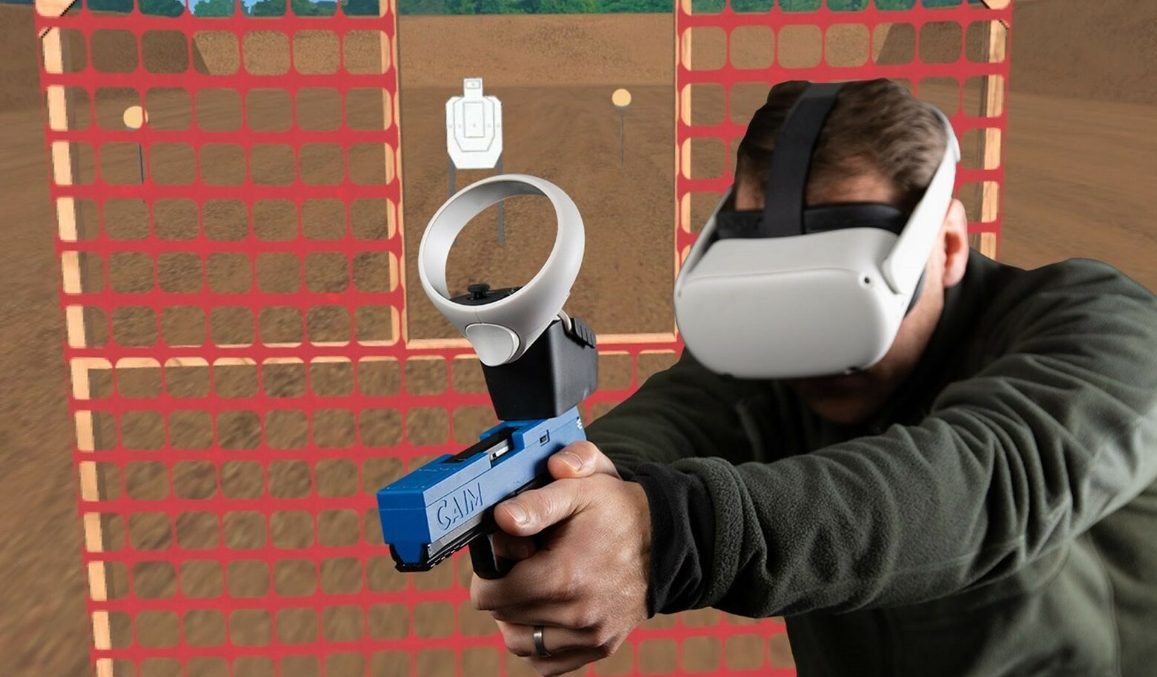
The virtual reality market literally exploded: Oculus, HTC Vive, PlayStation VR and hundreds of games where you can shoot green monsters, aliens or zombies. Graphics are getting better, helmets are lighter and controllers are more accurate. It would seem, why do you need some kind of separate shooting simulator if everything is already in virtual reality? However, professional instructors and experienced shooters know the difference very well. And it is fundamental.
In virtual reality, you shoot your finger. Even the most advanced controllers simulate the course of the descent, but do not make the weight of the weapon feel, the effort of the trigger, the balance that changes when you move the weapon from one target to another. You just poke a beam at the target. Great game, but not a full-fledged shooting simulator.
On the contrary, dry fire laser training uses real weapons. This can be your firearm equipped with a laser cartridge or a full-fledged training rifle with a laser unit. In any case, it has a real trigger with a move and requires effort. When you aim, you feel the weight, when you move, the weapon inertially pulls the hand forward. In virtual reality, this feeling is not.
The second VR problem is a slight delay. Even the most expensive systems have response times of tens of milliseconds. It would seem a small thing, but for shooting, where synchronicity of eye and movement is important, this delay is confusing. Your brain gets used to it, and on real weapons where there is no delay, you miss.
Finally, the cost. A full-fledged VR system for two is a powerful computer, two helmets, controllers, buying games. The amount is comparable to a good target shooting system. But the resource of VR controllers under constant loads is small, and mock-ups of weapons for a full-fledged shooting simulator live for years and withstand millions of clicks.
I’m not saying VR is bad. For home games, it is beautiful, but for training and preparation for competitions, the shooting simulator remains out of competition. Because it gives physics, realism and feedback where VR only gives a picture.
There is only one output – select a tool for the task. If the task is to learn how to shoot a firearm, then choose dry fire laser training, but if the goal is to have fun, then take a closer look at the VR tools.
