
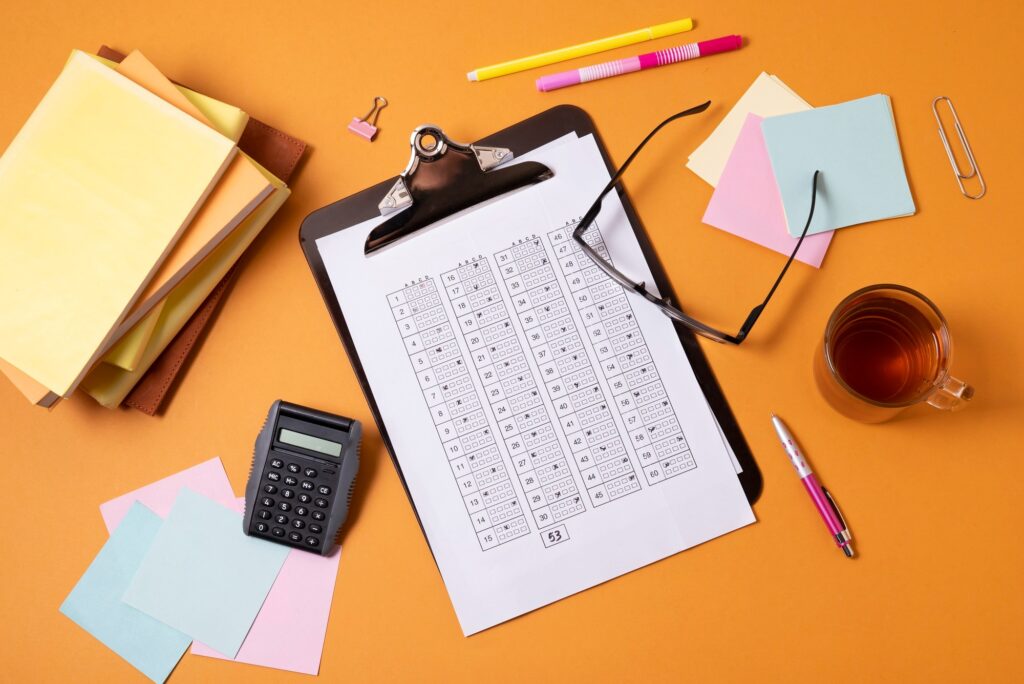
When students ask how many IB Math practice exams they “should” do, answers cluster at two unhelpful extremes: vague mantras like “as many as possible” or oddly precise numbers passed around online as if one size fits every situation. Both ignore the variables that determine how much simulation you need and what each paper is for, so they create more anxiety than clarity.
A usable planning framework starts from three interacting variables: which IB Math course and level you’re taking, what grade band you’re aiming for relative to your current baseline, and how far out from the examination you are. A student aiming for a 5 in applications and interpretation (AI) SL from a 4-baseline and a student targeting a 7 in analysis and approaches (AA) HL from a 6-baseline don’t need the same volume or timing of full papers; identical advice under-prepares one and burns out the other. Paper volume here is something you derive from those variables—not a fixed target to copy from someone else’s revision thread.
The Finite Archive—Why Scarcity Drives the Whole Framework
The starting constraint is simple but routinely underweighted: there is a finite pool of authentic IB Math examination papers. The IB’s own Diploma Programme sample-exam hub provides examples drawn from actual past examination papers and specimen papers, and the Mathematics section explicitly lists both Mathematics: analysis and approaches and Mathematics: applications and interpretation. What students informally call “real past papers” live in a bounded archive, not an endlessly refreshed stream.
Once you use one of those authentic papers under timed, exam-like conditions, its value as an unseen simulation is spent. You can still revisit individual questions for analysis later, but you cannot recreate the experience of meeting that paper for the first time under pressure. Scarcity, then, is not about running out of math questions altogether; it is about the limited number of full-paper simulations you can run before every paper in the archive is something you have already seen. Any sensible planning framework has to ration that unseen-paper value from the outset.
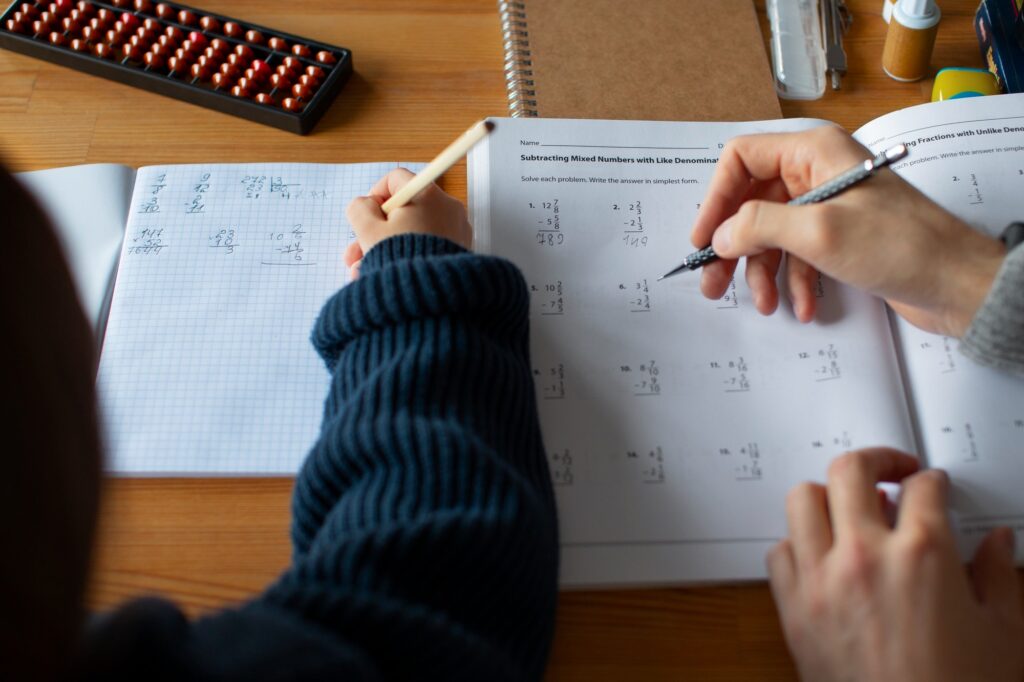
A Differentiated Volume Framework
Two axes matter most when you decide how heavily to lean on full-paper simulations: course complexity and performance gap. On the complexity side, AA HL demands more simultaneous coordination of algebra, calculus, proof-style reasoning, and interpretation within a single paper than AI SL, so each AA HL paper tends to test more interacting skills. On the performance-gap side, students already within one grade band of their target often need fewer full simulations, because their bottleneck is usually technique and small decision errors. Students trying to climb multiple grade bands need more simulation exposure, because their limiting factor shifts toward executing chains of methods accurately at speed, allocating time across sections, and sustaining focus over the full assessment pattern.
A practical way to apply those criteria is to define your simulation set by purpose, not by count. The first timed paper functions as a format-familiarity diagnostic—it exposes timing breakdowns and integration blind spots that topic drills won’t surface. After addressing those findings with targeted question sets, a calibration paper tests whether your adjustments hold under pressure. A confirmation paper then checks stability on a fresh timed attempt. If you’re roughly one grade band below your target, that three-role pattern may be sufficient, since the main job is diagnosis and patching. If you’re multiple grade bands away, repeat the confirmation role more than once—stable execution under timed conditions, not more content exposure, is what limits further progress. In either case, expand volume first through question-based analysis, and spend additional authentic full papers only where timing and integration demands can’t be replicated any other way.
The point at which full papers stop being useful is when they no longer teach you anything new about your performance. Signals of diminishing returns include being able to finish the paper without chronic overruns or blank sections, having encountered the main command-term patterns under time pressure, and seeing the same narrow cluster of errors recur from paper to paper. A practitioner guide on using IB past papers and mark schemes makes the same point: effective students integrate past-paper questions throughout their revision, analyze mistakes carefully against markschemes, and seek clarification where needed, rather than hoarding or mindlessly burning through whole papers. In that logic, review depth and targeted follow-up determine how many simulations you actually need, while arbitrary paper counts do not.
Simulation vs. Analysis—Two Modes, Two Resource Costs
To ration a finite archive intelligently, you need to separate simulation use of papers from analysis use. Simulation means sitting a full paper (or set of papers) under timed, exam-like conditions, without looking at notes or markschemes, and then marking yourself against the official scheme as if you were an examiner. This builds time-management fluency and paper-level integration, but it also depletes the unseen-exam value of that paper. Analysis mode, by contrast, treats questions as study material: you might work through past questions with the markscheme open, focus on a tight topic cluster, or dissect how different command terms change what is required. The IB Questionbank exists partly to support this mode: it lets teachers assemble custom tests from past IB exam questions, filtering by paper, level, command term, syllabus section, marks, and more, so you can get high-volume, targeted practice without spending whole intact papers.
Because authentic full papers are scarce, many students turn to third-party or mock papers, but not all of them deserve a timed-simulation slot. A mock set is simulation-suitable when its questions use IB-style command terms, marks reward method steps, and solutions show where marks are gained or lost. Red flags that should downgrade a paper to analysis-only are non-standard wording, no partial credit, or extreme difficulty. If you cannot confidently mark it in an IB-like way, treat it as material for technique drilling, not a high-stakes timed check. Questionbank-based sets scale analysis-mode volume with real IB questions, so authentic past and specimen papers can be reserved for the smaller number of simulations needed to test and refine exam execution.
Sequencing Rules—When to Begin, How Often, How Many to Reserve
The timing of when you start full-paper simulations matters as much as how many you eventually do. If you burn through authentic papers in the very early weeks of your final-year revision, you are spending scarce simulations before you have enough coverage to act on what they reveal; the paper mostly shows that your ceiling is low, without telling you precisely how to raise it. Early on, you are better served by topic-focused question sets drawn from past questions, which close obvious content gaps and help you learn to interpret command terms while keeping the archive of intact papers untouched. The right moment to introduce full simulations is once you have covered most of the syllabus and can turn what a timed paper shows you into targeted next steps. From there, work backward from your exam date: reserve a paper-dense final month or so when stamina, whole-paper time allocation, and switching between question types become non-negotiable; decide how often you can realistically sit a full timed paper; and allocate enough authentic papers to run your diagnostic, calibration, and confirmation roles while still keeping a small reserve for late-stage checks.
- After each timed paper, log three signals: where timing broke down or sections were left unfinished, the top one or two error clusters (for example, recurring algebra slips or misread command terms), and whether you know a concrete next action for each error.
- Once a week, compare your last two timed papers for score stability and for whether your top error clusters are changing or simply repeating.
- Do another full timed paper next if timing is still breaking or your top errors are shifting a lot; you are still learning new information from each simulation.
- Switch the next block to targeted Questionbank-style sets if the same one or two error clusters repeat; another full paper will only confirm the diagnosis you already have, while focused practice can actually close that specific gap.
- Stop adding new full papers and move into a maintain-and-confirm pattern once your timing is stable and the remaining errors are both repetitive and rare; at that point, additional simulations mainly consume time and authentic papers without changing your preparation decisions.
Paper Volume as a Derived Output of Planning
When you put the pieces together, the “right” number of IB Math practice exams is simply the minimum simulation set that, given your course and level, closes the grade gap you actually face in the time you actually have while leaving you with a small reserve of unseen papers for the final phase. Treat full authentic papers as scarce simulation assets and scale your volume with targeted questions instead. Then let a simple return-on-effort check after each timed paper decide whether the next block of work should be another full simulation, a focused Questionbank-style set, or a pause on new papers. In that model, paper count stops being an anxiety metric and becomes a sensible byproduct of clear planning.
