
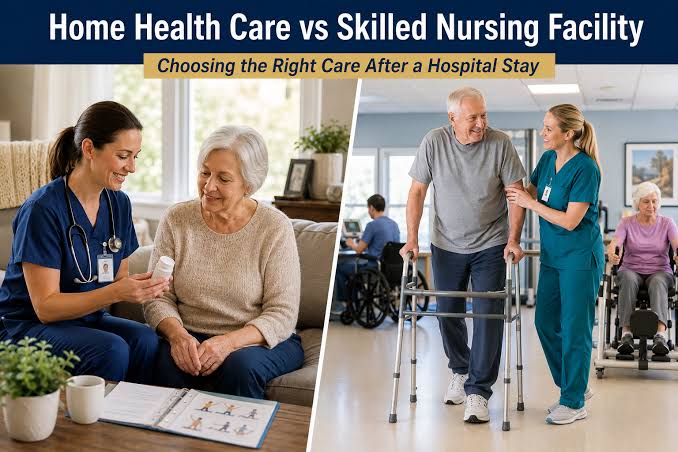
After a hospital stay, patients usually face one of two choices: go home with help, or move to a skilled nursing facility for a stretch of supervised recovery. Neither option is automatically better. The right one depends on the type of surgery, the support available at home, and how much daily medical attention a person actually needs.
This decision often gets made in a rush, right before discharge, when everyone is tired and ready to leave. That is exactly why it helps to understand the tradeoffs ahead of time.
What home recovery actually requires
Going home sounds simple, but it works only if certain things are already in place.
- A caregiver who can be present for at least part of each day
- A safe layout: no loose rugs, a clear path to the bathroom, a bed that is not hard to get in and out of
- A way to get to follow-up appointments
- Someone who can manage medication schedules and watch for warning signs
Home recovery tends to work well for patients who were healthy before surgery, who have a strong support system, and whose procedure does not require intensive physical therapy or wound management. Hip replacements, hernia repairs, and many gallbladder surgeries often fall into this category.
Home also has real advantages that are easy to underestimate. Familiar surroundings, a normal sleep schedule, and control over food and noise all support healing. Some patients recover faster simply because they are less stressed.
What a skilled nursing facility offers that home does not
A skilled nursing facility has staff on site around the clock: nurses, physical therapists, and aides trained to manage recovery from surgery, not just general care. That matters most when a patient needs:
- Daily wound checks or dressing changes
- Physical or occupational therapy multiple times a week
- Help managing several medications, especially blood thinners or pain medication that needs close monitoring
- Assistance with basic mobility, like getting up from a chair or walking to the bathroom
Patients recovering from major joint replacement, spine surgery, or procedures with a long, complex recovery often do better with this level of support in the first weeks. So do patients living alone with no one who can step in as a caregiver.
The tradeoff is cost and comfort. Facility stays are billed by the day, and even with insurance coverage, the amount owed can add up. Rooms are shared or hospital-like, and routines are set by staff schedules rather than personal preference.
Questions that help decide between them
Before choosing, it helps to ask a few direct questions.
How much physical help will I need with basic tasks, like standing, bathing, and getting to the bathroom, in the first two weeks? If the honest answer is “a lot,” and no one is available at home to provide it, a facility may be the safer choice.
Does my insurance cover a facility stay, and for how long? Coverage rules vary. Some plans cover a set number of days after certain surgeries, and running past that limit becomes an out-of-pocket cost.
Is my recovery mostly about rest, or does it require active therapy? Rest-heavy recovery often works fine at home. Recovery built around daily physical therapy sessions is easier to manage on-site.
Who is actually available to help me at home, and for how many hours a day? A caregiver who can visit for two hours in the evening is not the same as one who is present all day.
General surgeon Ian Reight, who has worked in surgical leadership roles including chief of surgery, points to this decision as one that should be discussed with the surgical team well before discharge day, not decided under pressure in a hospital hallway.
A middle option worth knowing about
Some patients do not need a full facility stay but are not quite ready for total independence either. Home health services can send a nurse or physical therapist to the house a few times a week, without moving the patient anywhere. This works well for people who have some support at home but need extra clinical oversight for wound care or therapy.
The bottom line
There is no single right answer here. A patient with a strong home support system and a straightforward surgery often does better at home. A patient with a complex recovery or little help at home often does better in a facility, at least for the first few weeks. The best approach is to ask the surgical team directly which category a given procedure and recovery plan fall into, and to have that conversation before the day of discharge arrives.
