
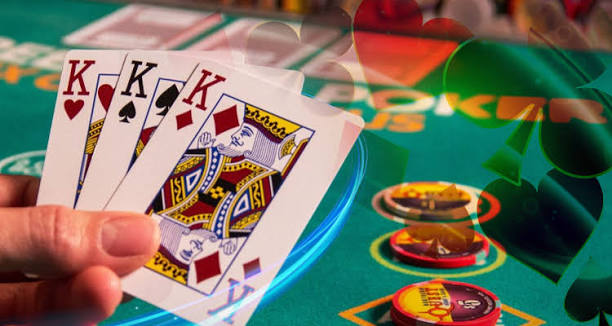
Vietnamese three-card games are often mentioned alongside sites such as iwin but the familiar interface says little about the distinctive Liêng hand rankings.
Liêng uses a standard card deck and combines three-card hand comparisons with a round of decisions about whether to continue or fold. Unlike a pure total-counting game, it features special combinations with their own hierarchy. Understanding the hand categories is the first step toward discussing the format accurately.
A name or category can be familiar while the details still differ between versions. Understanding the underlying process, the information shown on screen, and the questions worth asking creates a more reliable framework. This guide therefore concentrates on how to read the experience critically, not on assuming any particular outcome.
Three Cards Form the Starting Point
Each participant ordinarily receives three concealed cards, creating a small hand that will later be compared with the others still involved. Consider how the same feature might be interpreted by someone who sees only a short description. A person holding three cards in different suits must evaluate both special patterns and the ordinary point total rather than looking at a single face card. For a simple deal with layered decisions, an accurate comparison relies on the conditions governing the action. A bold slogan or highlighted number alone cannot answer what actually produces a result.
A simple deal with layered decisions. Review the rules governing the initial contribution, turn order and permitted actions before trying to assess the result. While assessing a simple deal with layered decisions, separate what is documented from what remains uncertain. This prevents one appealing example from being repeated as a general rule without evidence. A short hand does not necessarily create a simple decision process when additional betting rounds are involved. That is why a claim about a simple deal with layered decisions should identify the version and assumptions involved. An observation from one setting need not hold in another.
The Top Categories Explained
Common Liêng rules distinguish three-of-a-kind, consecutive three-card sequences and a special category built from picture cards. The practical implications emerge when the label is translated into a real sequence of actions. A hand of three matching sevens belongs to a different class from three consecutive ranks, even when both look unusually strong. With sáp, liêng and ảnh, a quick browse may leave the crucial distinction unclear. Establishing what is included and excluded is more useful than accepting a simplified promotional description.
Sáp, liêng and ảnh
Confirm the ordering of sáp, liêng and ảnh, and check whether suit is used to break ties under the selected variant. For sáp, liêng and ảnh, read the relevant terms before drawing conclusions. A lone graphic or isolated figure leaves important conditions unspecified; those missing details should not be filled in by guesswork. Hand rankings should never be copied blindly from poker because Liêng is a separate game. In practice, sáp, liêng and ảnh may be treated differently by different variants, regions or implementations. The published instructions for the specific version therefore remain essential.
When No Special Hand Appears
Hands outside the named combinations can be compared by a points system often based on the last digit of the total card values. A small example shows why the distinction deserves attention. A group of three ordinary cards may sum to sixteen, leading to six points under a modulo-ten scoring convention. In the context of counting ordinary points, appearance cannot replace a clear explanation of the rules. Naming the relevant variables makes it easier to distinguish substance from presentation.
Counting ordinary points
Look up how aces and picture cards contribute to the calculation instead of guessing from Western three-card games. Test the interpretation against a simple hypothetical example. If the wording supports two incompatible readings, seek a more precise definition before relying on it. Point ties and special exceptions are sometimes settled by additional ranking criteria. Treat the explanation as a checklist, not a prediction. Conditions can change, while transparent documentation remains more useful than unsupported certainty.
A Clear Hand-Reading Routine
- Identify the three-card categories before discussing points.
- Check how an ordinary point total is calculated.
- Understand the meaning of folding, calling and raising.
- Treat behavioural interpretations as uncertain rather than factual.
The Meaning of Folding
Liêng includes actions that may remove a player from the current showdown, changing the number of hands that are eventually compared. One useful way to frame the issue is through an ordinary reader encountering the feature for the first time. A person can fold before seeing every opposing card, so the amount already contributed and the uncertainty of hidden hands matter. Understanding a decision can end participation requires more than recognising the label. Translating the wording into a specific action, rule or calculation removes an important source of ambiguity.
A decision can end participation. Separate the mechanical definition of call, raise and fold from any claim that a particular choice will win. Compare the main display, help material and formal rules for consistency. Contradictory wording deserves attention because even a small omission can change expectations. Psychological confidence is not equivalent to information about the unseen deck. The goal here is clarity rather than certainty. A short account cannot replace current terms or transform one example into a guaranteed result.
Reading Opponents Without Mythmaking

Players may attempt to interpret timing and behaviour, but these observations never reveal concealed cards with certainty. The difference becomes easier to appreciate in a concrete situation. One person might act quickly while holding a weak ordinary total, while another may hesitate over a special combination. When examining behaviour is not proof of a hand, the useful distinction is between a surface impression and the details a reader can actually verify. Clear terms make that comparison more dependable.
Behaviour is not proof of a hand. Distinguish observed actions from inferred intentions and avoid treating a single unusual decision as a reliable signal. Think about both the usual case and an unusual outcome when reviewing behaviour is not proof of a hand. Edge cases often reveal gaps that a straightforward example leaves hidden. On digital interfaces, network delays and interface prompts can further distort perceived timing. When financial choices are involved, understanding the process can inform decisions but never eliminate uncertainty or possible losses.
A Good Way to Learn Rankings
Sorting printed example hands into categories makes the special ranking structure easier to remember than reading a list once. Consider how the same feature might be interpreted by someone who sees only a short description. Set aside a three-of-a-kind, a run and a mixed hand, then identify which scoring rule applies to each one. For compare sample hands side by side, an accurate comparison relies on the conditions governing the action. A bold slogan or highlighted number alone cannot answer what actually produces a result.
Compare sample hands side by side
Record the applicable tie-break procedure and repeat until the boundary between ordinary points and named hands is clear. While assessing compare sample hands side by side, separate what is documented from what remains uncertain. This prevents one appealing example from being repeated as a general rule without evidence. This exercise develops rules knowledge, not a formula for winning a game with hidden information. That is why a claim about compare sample hands side by side should identify the version and assumptions involved. An observation from one setting need not hold in another.
Liêng Hand Categories at a Glance
| Category | Typical description |
| Sáp | Three cards of the same rank. |
| Liêng | Three consecutive ranks. |
| Ảnh | A special picture-card combination under local rules. |
| Ordinary points | Comparison method when no higher category is present. |
What Makes Liêng Distinct
A clear introduction to Liêng should explain that three cards can be evaluated in several different ways. Hand categories, point counting and decision timing each deserve separate attention. Once those ideas are understood, readers are better equipped to recognise when two versions of the rules do not match.
Readers exploring Bài Liêng should use the exact published hand-ranking table rather than assuming that every three-card game follows poker conventions.
