
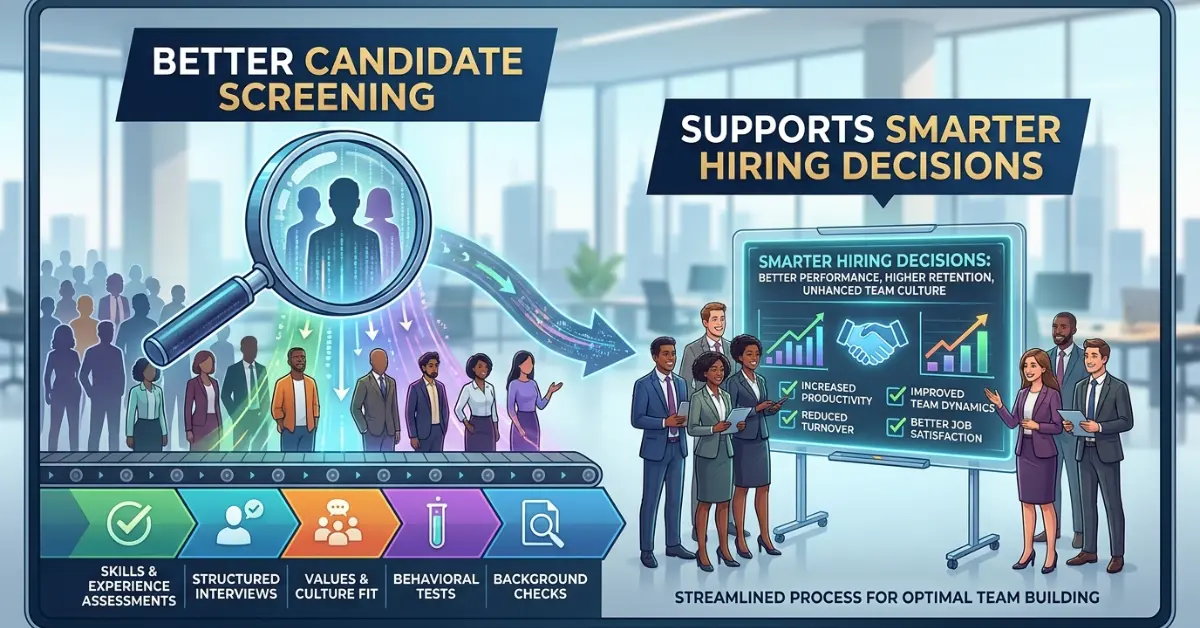
Hiring well is not just about filling roles quickly. It is about identifying people who can perform, stay engaged, and contribute to the organization’s goals. For many employers, the challenge is building a process that is both efficient and consistent without making candidates feel like they are being pushed through a machine.
Why Traditional Hiring Processes Often Fall Short
A resume can tell part of a candidate’s story, but it rarely shows the full picture. Work history, education, and keywords may help narrow a large applicant pool, yet they do not always reveal whether someone can handle the day-to-day realities of the job.
Interviews can help, but they also have limits. Different managers may ask different questions, interpret answers differently, or place too much emphasis on first impressions. When hiring decisions rely heavily on gut instinct, companies may struggle with inconsistency.
This becomes even more difficult in high-volume hiring environments. Recruiters may need to review hundreds of applications while also coordinating interviews, communicating with managers, and keeping candidates engaged. Without a structured process, strong applicants can be overlooked and poor-fit candidates can move too far forward.
The Role of Pre-Employment Testing in a Stronger Hiring Strategy
Pre-employment assessments can help employers evaluate job-relevant skills, behaviors, and abilities before making a hiring decision. When used thoughtfully, testing adds structure to the process and gives hiring teams more objective information to consider.
Organizations often use assessments to better understand:
- Whether candidates can perform key job tasks
- How they approach common workplace situations
- Their communication or problem-solving style
- Their fit for customer-facing, operational, or leadership roles
- Areas where additional training may be needed after hire
For employers exploringpre employment testing for hiring, the goal should not be to replace human judgment. Instead, testing should support better judgment by giving hiring teams clearer, more consistent insight.
What Makes an Assessment Process Effective?
Not every test is useful, and not every assessment belongs in every hiring process. The best approach starts with the role itself. Employers should ask what success looks like in the position, which skills matter most, and where past hiring mistakes have occurred.
Relevance to the Job
An effective assessment should connect directly to the responsibilities of the role. For example, a customer service position may require communication judgment and patience, while a logistics role may require attention to detail and process reliability.
Consistency Across Candidates
Testing can help create a more uniform candidate experience. When every applicant is evaluated using the same standards, hiring teams can compare results more fairly and reduce avoidable variation in the process.
A Balanced Decision-Making Framework
Assessments should be one part of a broader hiring system. Interviews, work history, references, and role-specific requirements still matter. The strongest hiring decisions usually come from combining multiple sources of information.
Benefits for Employers and Candidates
A better screening process benefits both sides of the hiring equation. Employers gain more confidence in their decisions, while candidates get a clearer and more professional experience.
For employers, structured screening can reduce wasted time. Recruiters can focus attention on applicants who are more likely to match the role, and hiring managers can spend interviews discussing meaningful topics instead of starting from scratch.
For candidates, a clear process can feel more transparent. Instead of wondering how decisions are made, applicants are guided through defined steps. This can improve trust, especially when the process is respectful, timely, and easy to understand.
Practical Steps for Improving Hiring Assessments
Companies do not need to overhaul everything at once. Small improvements can make a measurable difference over time.
Start by reviewing recent hiring outcomes. Look for patterns in turnover, performance issues, or roles that consistently take too long to fill. Then identify where better screening could help.
A practical framework might include:
- Define the traits and skills linked to success in the role.
- Choose assessments that relate directly to those requirements.
- Train hiring teams on how to interpret results responsibly.
- Combine assessment data with structured interviews.
- Review outcomes regularly and adjust the process as needed.
The key is to keep the system practical. If testing adds unnecessary complexity or slows hiring without improving decisions, it needs to be refined.
Avoiding Common Mistakes
One common mistake is using assessments too late in the process. If testing happens only after several interviews, employers may have already invested too much time in candidates who are not the best fit.
Another mistake is treating results as automatic pass-or-fail answers. Assessments are most useful when they guide discussion and clarify risk areas. A candidate with mixed results may still be a strong hire if the employer understands where support or training may be needed.
Finally, companies should avoid generic testing that does not reflect the actual job. A thoughtful, role-based approach is far more useful than a one-size-fits-all process.
Conclusion
Better hiring starts with better information. Resumes and interviews remain important, but they are stronger when supported by structured, job-relevant evaluation. By using pre-employment testing thoughtfully, employers can improve consistency, reduce guesswork, and create a hiring process that serves both the organization and the candidate.
