
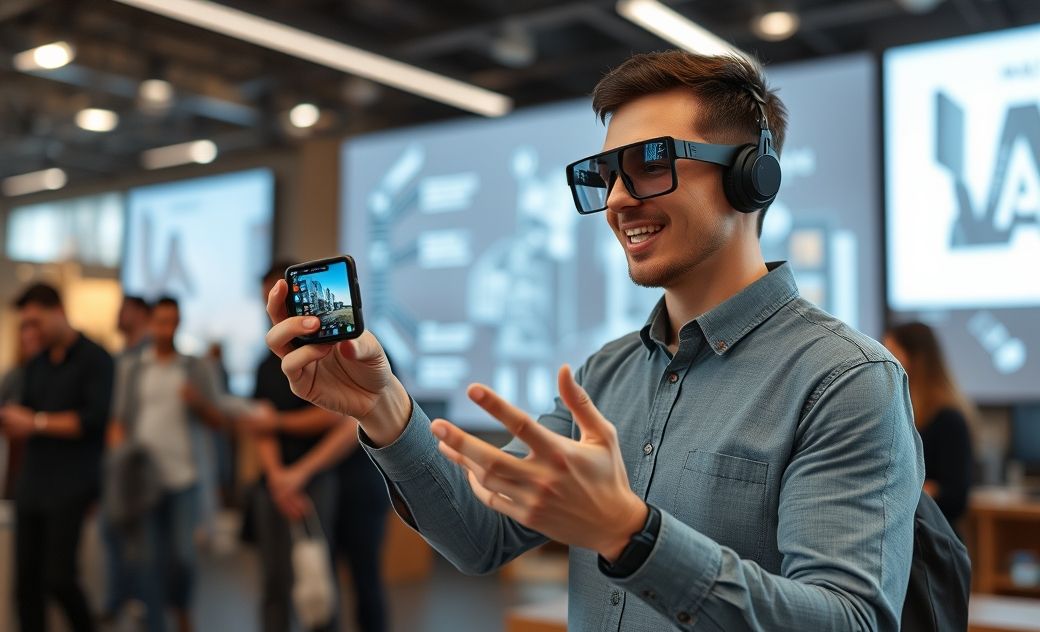
Augmented Reality (AR) has been transforming the technology landscape by blending digital elements into our physical world. Initially seen as a futuristic concept, AR has gradually carved a niche in everyday tech applications, opening new possibilities in how we connect, learn, and interact with our environment.
The Growing Presence of Augmented Reality
AR technology seamlessly integrates digital content with real-world environments, offering an interactive experience accessible through devices like smartphones, tablets, and AR glasses. This has facilitated its adoption across a wide range of sectors, making it more than just a novelty technology.
Advancements in Device Compatibility
One significant factor contributing to the rise of AR is the advancement in device compatibility. Most modern smartphones are equipped with cameras and sensors capable of supporting AR applications. Moreover, tech giants have been investing heavily in AR development, making it a core component of their ecosystems, thereby making AR experiences more accessible to the general public.
Applications of AR in Everyday Life
AR is not confined to niche industries but actively enhances routine activities, making it a versatile tool in various applications.
Shopping and Retail
One of the most practical applications of AR is in shopping and retail. Retailers are using AR to offer virtual fitting rooms where customers can try on clothes or accessories without physically being in the store. This technology also enables users to visualize how furniture or decor would look in their home, greatly influencing purchasing decisions.
Education and Training
AR has revolutionized the education sector by facilitating immersive learning experiences. Students can explore 3D models of complex subjects, such as human anatomy or historical sites, enhancing understanding and retention. Similarly, in professional training, AR aids in simulating real-world scenarios without the associated risks, especially in fields like medicine and aviation.
The Impact of AR on Social Interaction
AR technology is reshaping social interaction by introducing new ways to communicate and share experiences. Social media platforms have incorporated AR filters and effects, making interactions more engaging and dynamic. This integration has found favor among users, particularly younger demographics, who appreciate the blend of reality with creative digital augmentations.
Challenges and Future Prospects
Despite its promising advancements, AR technology does face challenges that could hinder its growth.
Privacy Concerns
As AR applications become more commonplace, concerns about privacy and data security are at the forefront. AR devices gather and process a considerable amount of user information, making it crucial to address how this data is used and protected.
Technological Limitations
Current AR experiences can be limited by the capabilities of hardware and software. While progress is ongoing, including the development of more sophisticated AR glasses and improved graphics processing, overcoming these technical hurdles is vital for AR’s broader acceptance.
Looking ahead, the AR landscape is expected to expand further. Continuous advancements in artificial intelligence and machine learning, coupled with an ever-increasing desire for enhanced user experiences, point toward a future where AR is an integral part of our daily digital interactions.
In summary, the rise of augmented reality in everyday tech applications signifies a remarkable shift toward a more integrated digital world. As technology advances, AR will undoubtedly continue to play a pivotal role in shaping how we perceive and interact with the world around us.
