
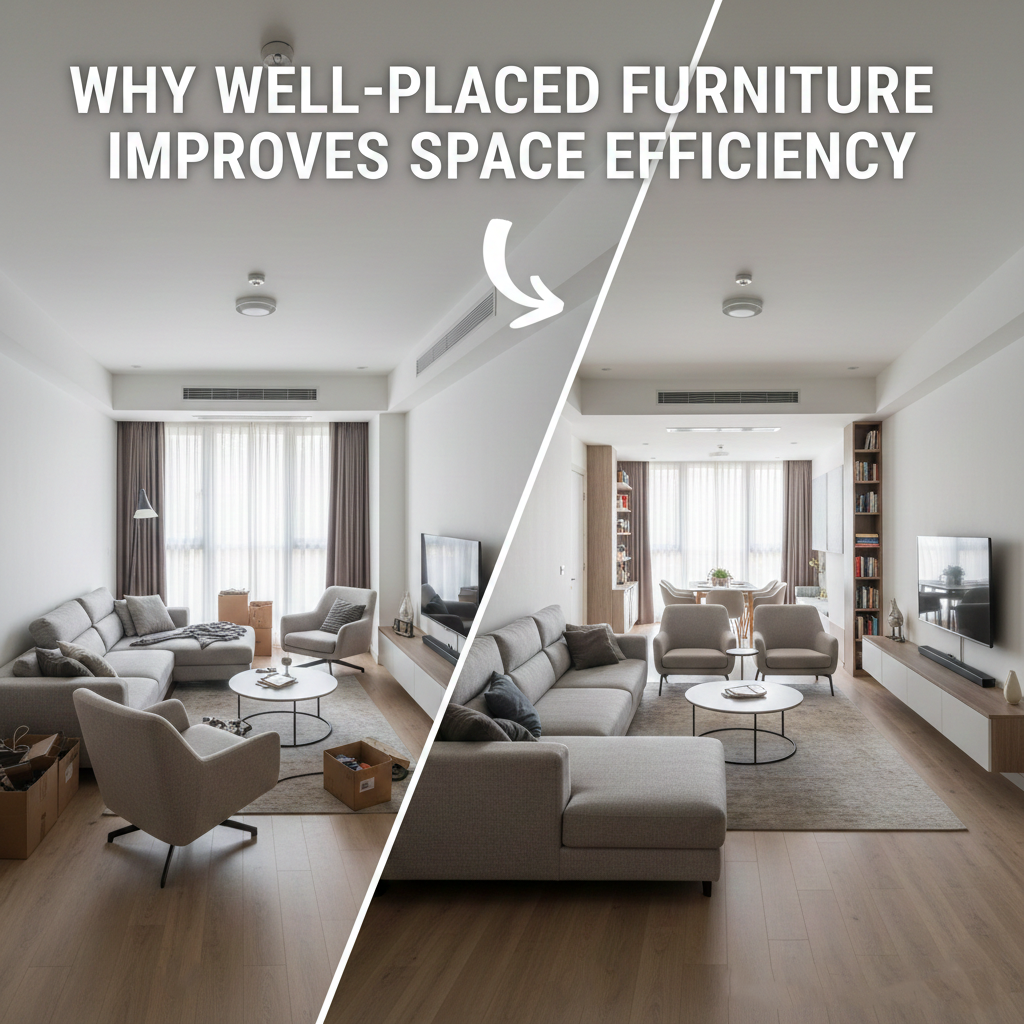
Most people think a room feels small because it actually is small. In reality, space usually feels tight because furniture is not placed with enough thought. Even a large room can feel uncomfortable if furniture blocks movement or overwhelms the layout. On the other hand, a modest sized room can feel open and relaxed when furniture is arranged with intention.
Furniture placement quietly controls how a room works. It decides where people walk, where they pause, and how long they want to stay in the space. When placement is careless, the room feels cluttered no matter how nice the furniture is. When placement is done well, the room feels easier to live in without changing anything else.
Space efficiency is not about having less furniture. It is about letting the furniture you already have work better for you.
How Placement Shapes the Experience of a Room
The moment you enter a room, you sense whether it feels comfortable or awkward. This reaction happens before you notice colours or decor. It comes from how easily you can move through the space.
If you have to dodge around a coffee table or squeeze past a chair, the room feels stressful. If movement feels natural and uninterrupted, the room instantly feels larger and calmer.
Furniture placement guides the body. Clear paths tell you where to walk. Balanced seating tells you where to sit. Open areas give your eyes space to rest. When these elements are missing, even beautiful furniture can make a room feel heavy.
Good placement makes the room feel intentional instead of accidental.
Creating More Floor Space Without Removing Furniture
One of the biggest reasons rooms feel crowded is blocked floor space. This usually happens when furniture is placed without considering how people actually move.
Walking paths should be obvious and comfortable. You should be able to walk from the door to the seating area, window, or bed without obstacles. When pathways are clear, the room immediately feels more open.
Grouping furniture instead of spreading it randomly also helps. A sofa and chairs placed close enough to form a conversation area take up less visual space than pieces scattered across the room. The room feels organised rather than filled.
Leaving small areas of open floor visible is important. These empty spaces act like breathing room and prevent the layout from feeling packed.
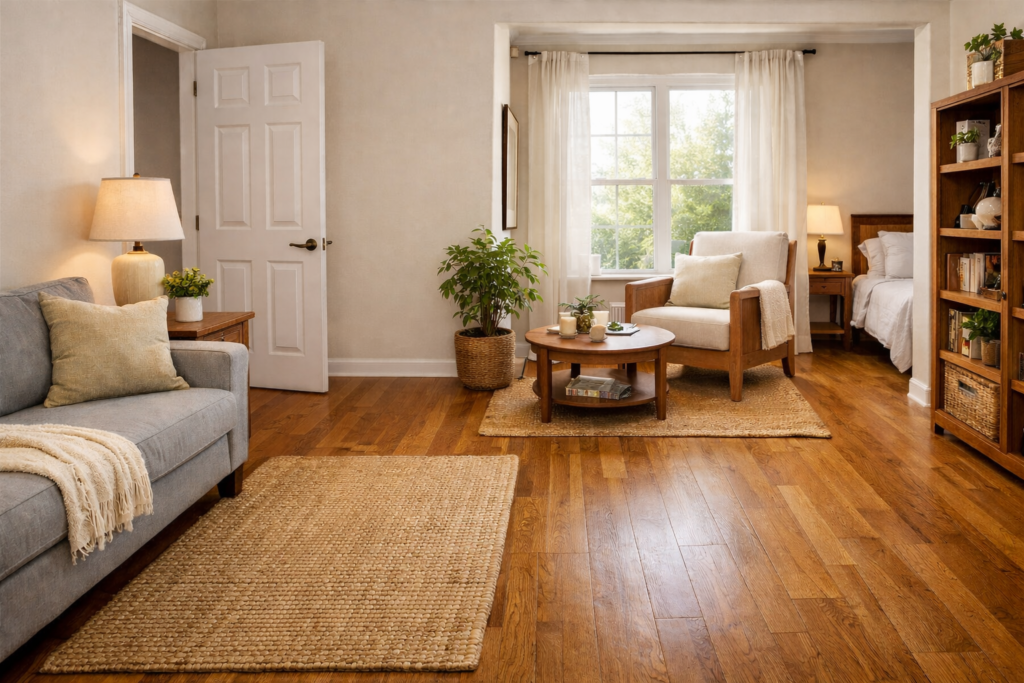
Making Small Rooms Feel Comfortable Instead of Cramped
Small rooms often suffer from poor layout more than size limitations. Too much furniture or furniture that is too large for the room makes everything feel squeezed.
Choosing furniture that suits the scale of the room is key. Slim sofas, compact tables, and raised leg furniture keep the space visually lighter.
Placement matters just as much as size. Furniture should not block windows or natural light. Light moving freely through the room helps it feel bigger.
Allowing some space between furniture and walls can also improve balance. Pushing everything tightly against walls sometimes makes rooms feel boxed in rather than open.
A thoughtful layout can make a small room feel surprisingly spacious.
Creating Functional Zones Without Closing the Space
Many rooms serve more than one purpose. Living rooms become workspaces. Bedrooms double as reading areas. Dining spaces are used for everything from homework to conversations.
Creating zones helps manage this without building walls. Rugs, lighting, and furniture placement can clearly separate areas while keeping the room open.
For example, a rug under a seating area visually defines the space without closing it off. A floor lamp beside a chair signals a reading corner. A desk placed near a window feels intentional rather than temporary.
When zones are clear, the room feels organised even if it serves multiple functions.
Why Multi Functional Furniture Improves Space Efficiency
Multi functional furniture plays a major role in efficient spaces, especially in smaller homes.
A bench with storage replaces the need for extra cabinets. A foldable dining table adapts easily to daily meals and occasional gatherings. A space saving sofa cum bed allows a single room to function as both a living area and a sleeping space without adding visual or physical clutter.
Using furniture that performs more than one role reduces the total number of pieces needed. This immediately opens up floor space.
The best multi functional furniture feels natural to use. If it is too heavy or complicated, it ends up staying unused. Simplicity is what makes versatility truly effective.
Using Walls Instead of Crowding the Floor
When floor space is limited, walls become valuable.
Wall mounted shelves, cabinets, and desks provide storage and function without taking up walking space. This keeps the room feeling open and easier to move through.
Tall shelving units store more vertically while keeping the floor clear. When placed correctly, they do not feel bulky.
Floating furniture also feels lighter visually. Because the floor remains visible underneath, the room feels less crowded.
Using walls wisely helps maintain balance between storage and openness.
How Wall Mounted Furniture Supports Better Flow
Wall mounted desks and shelves are especially helpful in rooms that serve multiple purposes.
They allow work or storage areas without permanently occupying floor space. This flexibility is useful in bedrooms or living rooms where layouts may change.
Wall mounted nightstands keep essentials close without narrowing walkways around the bed. This improves both function and comfort.
Reducing floor clutter improves both movement and visual calm.
The Role of Accessories in Space Efficiency
Accessories are often overlooked, but they strongly influence how efficiently a space works.
Rugs help organise furniture and guide movement. A properly sized rug anchors a seating area and prevents furniture from feeling scattered.
Lighting placement matters too. Floor lamps and table lamps should sit where they support activities without blocking movement.
Mirrors reflect light and visually extend space when placed thoughtfully. They work best where they amplify natural light or open views.
Side tables, benches, and shelves help manage everyday items without cluttering main surfaces. When accessories are placed with purpose, they support the layout rather than disrupt it.
Keeping Movement Comfortable and Safe
Clear movement paths are essential for comfort. Furniture should never force people to twist or squeeze through tight spaces.
This is especially important in homes with children or elderly family members. Easy movement improves safety and reduces daily frustration.
Doors, hallways, and frequently used paths should remain as open as possible. Furniture should support movement, not restrict it.
When walking through a room feels effortless, the room feels larger.
How Organization Affects How a Space Feels
Well placed furniture naturally encourages organisation. When furniture supports storage and function, clutter has fewer places to gather.
Surfaces stay clearer. Items have designated spots. The room becomes easier to maintain.
This sense of order reduces mental stress. A room that feels organised helps people relax and focus.
Space efficiency improves not just the room, but the experience of living in it.
Balancing Function and Style
Efficient furniture placement does not mean giving up style.
In fact, good placement allows design elements to stand out more clearly. When rooms are not overcrowded, textures, colours, and materials are easier to appreciate.
A few well positioned pieces make a stronger impression than many poorly arranged ones.
Style works best when supported by function.
Designing Spaces That Work Every Day
A well designed space should support real life, not just look good in photos.
Furniture placement should make daily routines easier. Sitting, walking, cleaning, and relaxing should feel natural.
Layouts that adapt easily over time stay useful longer. Flexible placement allows rooms to grow and change with lifestyle needs.
Final Thoughts
Well placed furniture is one of the simplest ways to improve space efficiency without renovation or expense.
It improves movement, reduces clutter, and makes rooms feel larger and calmer. Through thoughtful layouts, multi functional furniture, vertical solutions, and careful accessory placement, any space can feel more open and organised.
When furniture works with the room instead of against it, the entire home feels easier to live in.
