
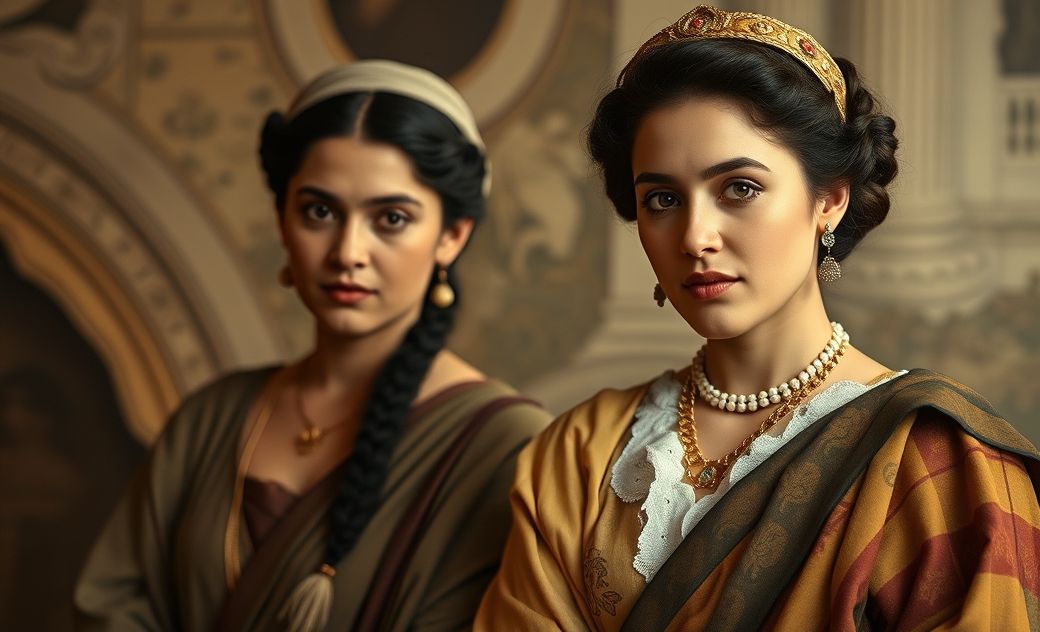
Throughout history, women have played crucial roles in shaping societies, breaking barriers, and influencing major changes worldwide despite the challenges and restrictions they faced. This article delves into the remarkable stories of some of the most influential women who have left a lasting impact on world history.
Cleopatra VII
Cleopatra VII, the last active ruler of the Ptolemaic Kingdom of Egypt, remains one of history’s most renowned figures. Known for her intelligence and political acumen, Cleopatra was a powerful leader who captured the imagination of the Roman Empire. Her alliances with Julius Caesar and later with Mark Antony were strategic moves to protect Egypt’s independence and influence. Cleopatra’s legacy endures as a symbol of strength and resilience against patriarchal power structures.
Joan of Arc
Joan of Arc, a peasant girl from France, rose to fame for her role in the Hundred Years’ War. Guided by divine visions, Joan took command of the French army and led several successful campaigns against English forces, most notably lifting the Siege of Orléans. Her courage and determination inspired the French, and she was instrumental in the coronation of Charles VII. Though tried and executed for heresy at 19, Joan was canonized as a saint and remains an enduring symbol of faith and patriotism.
Marie Curie
A pioneering physicist and chemist, Marie Curie broke new ground in the scientific community. She was the first woman to win a Nobel Prize and the only person to receive Nobel Prizes in two different scientific fields: Physics and Chemistry. Her groundbreaking research on radioactivity paved the way for advancements in medical treatment and energy production. Curie’s dedication and innovation continue to inspire countless women in STEM fields worldwide.
Rosa Parks
Rosa Parks is often heralded as the “mother of the civil rights movement” in the United States. Her courageous refusal to give up her bus seat to a white man in Montgomery, Alabama, in 1955, became a pivotal symbol of resistance against racial segregation. This act of defiance sparked the Montgomery Bus Boycott, a landmark event that led to the Civil Rights Act of 1964. Parks’ bravery and her steadfast commitment to justice played a critical role in challenging racial discrimination and inequality.
Malala Yousafzai
As a tireless advocate for girls’ education and women’s rights, Malala Yousafzai rose to prominence after surviving an assassination attempt by the Taliban in 2012. Her relentless campaign for educational equality has transformed the lives of millions of girls around the world. In 2014, Malala became the youngest recipient of the Nobel Peace Prize. Her story continues to inspire and mobilize activists globally, underscoring the importance of education as a fundamental human right.
Conclusion
These influential women, among many others, have not only reshaped history but have also laid the groundwork for future generations to follow. Through their courage, intellect, and perseverance, they challenged societal norms and ignited change across diverse fields. As we honor their contributions, their stories serve as powerful reminders of the relentless spirit of women in overcoming adversity and driving progress throughout world history.
